China has entered 2026 with a powerful surge in exports that is reshaping global trade flows, especially in high-technology sectors such as semiconductors, electric vehicles, and renewable-energy components. The world’s second-largest economy is increasingly relying on advanced manufacturing exports to sustain growth, while global demand for electronics and clean-energy technology continues to rise.
Recent data shows China’s exports grew dramatically at the start of 2026, rising more than 21 percent during the first two months of the year. Strong global demand for electronics, integrated circuits, and technology equipment has played a major role in the surge. Semiconductor exports alone jumped more than 60 percent, reflecting the global boom in artificial intelligence hardware and advanced computing infrastructure.
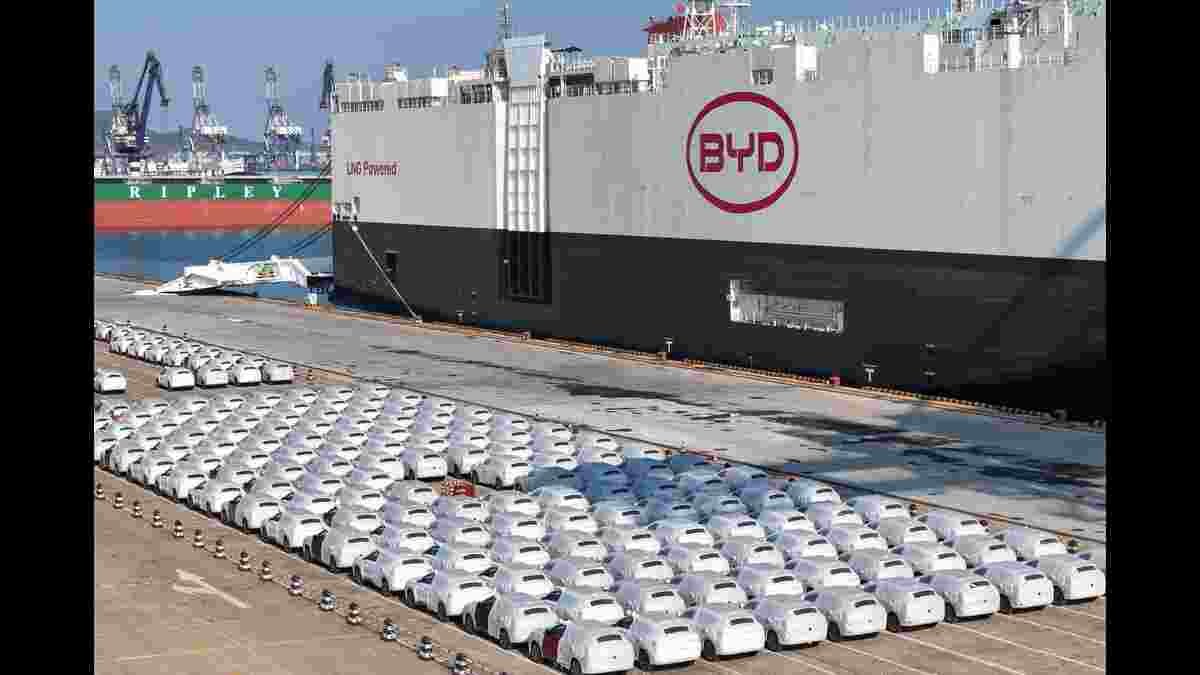
At the same time, China’s rapidly expanding electric vehicle industry has become another powerful engine for export growth. Chinese automakers shipped millions of vehicles overseas in the past year as companies pushed aggressively into international markets. Electric-vehicle exports rose sharply and now reach buyers across Europe, Southeast Asia, the Middle East, and Latin America.
This shift reflects a deeper transformation in China’s manufacturing strategy. For decades the country dominated global trade with low-cost consumer goods such as textiles and basic electronics. Today the focus has shifted toward high-value technology products including EV batteries, solar equipment, chips, and advanced electronics. Analysts say these industries are now replacing traditional manufacturing as the primary drivers of export growth.
Electric vehicles illustrate how dramatically the global trade landscape is changing. Chinese EV manufacturers are expanding internationally as competition intensifies in the domestic market. Some companies are targeting emerging markets such as Mexico, Thailand, and the United Arab Emirates, while others are gaining market share in Europe despite tariffs and regulatory challenges. The rapid expansion has helped China become one of the world’s largest auto exporters, with electric models forming a major share of shipments.
The export surge also extends beyond finished vehicles. Chinese companies dominate several critical supply chains that power the global green-energy transition. The country produces a large share of the world’s lithium batteries, solar panels, and rare-earth materials used in electric motors and advanced electronics. These supply chains have become essential for industries ranging from renewable energy to consumer electronics and defense technology.
Semiconductors are another critical area shaping global trade patterns. Demand for chips used in artificial intelligence systems, smartphones, and electric vehicles has soared in recent years. China’s semiconductor exports have expanded quickly as manufacturers increase production capacity and governments around the world invest heavily in digital infrastructure and AI technologies.
However, the export boom is not without challenges. Trade tensions and export controls remain a major source of uncertainty for global technology supply chains. Several governments are imposing restrictions on semiconductor technologies and strategic materials, while geopolitical conflicts could disrupt shipping routes and energy prices. These factors may affect trade volumes in the coming months.
Despite these risks, economists believe China’s export-driven strategy will remain a key force shaping global commerce. With strong manufacturing capacity, advanced industrial policy, and growing dominance in clean-energy technologies, Chinese exporters are positioned to play a major role in the next phase of globalization.
As demand for electric vehicles, chips, and renewable-energy equipment continues to expand worldwide, China’s factories and exporters are increasingly influencing how goods move across the global economy. The result is a new era of trade in which advanced technology, rather than low-cost labor, defines the competitive landscape.