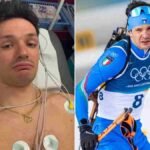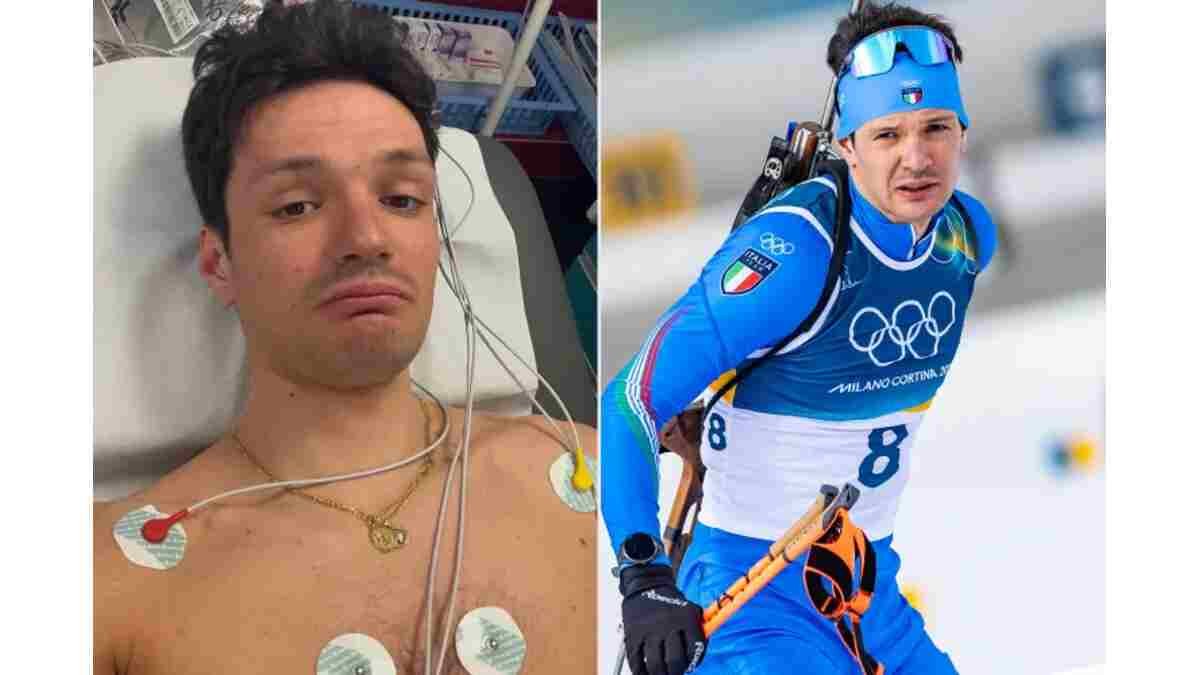
One of the most turbulent stories of the 2026 Winter Olympics in Milano-Cortina has emerged from the biathlon course, where Italian star Tommaso Giacomel faced a frightening health scare that culminated in urgent heart surgery just days after withdrawing from competition. The 25-year-old athlete had been leading in the men’s 15 km mass start race when he suddenly experienced severe breathing difficulties and was forced to pull out, sending shockwaves through the Olympic community and sparking global concern for his well-being.
Giacomel, a prominent figure in international biathlon and silver medallist in the mixed relay earlier in the Games, was in contention for an individual podium finish when the incident occurred. Spectators and fellow competitors watched in disbelief as the Italian’s performance came to an abrupt halt due to his health emergency. Initial tests at Galeazzi Hospital in Milan revealed an underlying atrial conduction abnormality, a condition affecting the electrical signals that regulate the heartbeat. This diagnosis prompted medical staff to undertake a corrective procedure to stabilize his condition.
In a closely monitored operation referred to as an ablation procedure, cardiologists targeted the irregular electrical pathway responsible for Giacomel’s sudden distress. Reports confirm that the surgery was successful, with the athlete expected to be discharged from hospital soon. Trainers and doctors have advised a recovery period of approximately two weeks before Giacomel resumes regular training, pending further evaluations.
The Italian Winter Sports Federation (FISI) expressed its support and relief following the successful operation, noting that the young athlete’s earlier screenings — including CT, MRI and exercise tests — had initially shown no red flags. The more detailed electrophysiological study was the key to uncovering the hidden cardiac issue, underscoring the unpredictable nature of high-performance sports physiology.
Giacomel himself shared an emotional message on social media, describing the experience as the “worst feeling” he had ever encountered and acknowledging his deep disappointment at having to abandon a race he was dominating. Despite his frustration, he assured fans that his determination to return to competition remains strong, with plans to aim for the next Winter Olympics in France.
This incident has highlighted the sometimes precarious balance elite athletes maintain between peak physical performance and underlying health risks. Giacomel’s case serves as a powerful reminder of the importance of thorough diagnostic assessments, especially at the highest levels of sport where physical strain is intense and continuous.
The broader biathlon community rallied in support, with organizations such as the International Biathlon Union issuing messages wishing Giacomel a smooth recovery. His absence from upcoming World Cup stages, including events in Kontiolahti and Otepää, will be felt by fans and competitors alike, as he had been a strong contender throughout the season with multiple World Cup victories.
Giacomel’s journey from an Olympic podium finish in the mixed relay to this unexpected health challenge reflects both the highs and lows that athletes can experience at major international events. While the focus now is on his recovery and long-term health, the athlete’s resilience and positive response to surgery offer encouragement to supporters worldwide.
As he begins his rehabilitation with the goal of competing again, Giacomel’s story is resonating with sports communities globally — illustrating the physical demands of elite competition, the critical role of modern sports medicine, and the human spirit that keeps athletes striving for excellence even in the face of adversity.